
Scenario
They faced the challenge of siloed systems and data fragmentation, hindering efficient communication and collaboration across departments. The lack of integration resulted in manual processes, data inconsistencies, and delays in decision-making. To address these issues, Client recognised the need for a comprehensive integration platform to unify its IT landscape.
Solution Offered
Our team embarked on a collaborative journey with Client to implement MuleSoft integration solutions tailored to their specific needs. The project encompassed several key phases:
Requirements Gathering:
We conducted thorough workshops and interviews with Client’s stakeholders to understand their business processes, data sources, and integration requirementsSolution Design:
Based on the gathered requirements, we developed a detailed solution architecture, outlining the integration patterns, API designs, and data mappings necessary to achieve seamless connectivity between Crowley’s systems.Implementation:
Leveraging MuleSoft’s Anypoint Platform, we implemented integration flows, APIs, and connectors to facilitate the exchange of data and services between Client’s applications, including CRM, ERP, and logistics systems.Testing and Validation:
Rigorous testing procedures were conducted to ensure the reliability, performance, and security of the integration solutions. We collaborated closely with Client’s IT team to validate the functionality and address any issues promptly.Deployment and Support:
Upon successful testing, we deployed the MuleSoft integration solutions into Client’s production environment, providing comprehensive support and training to ensure a smooth transition and ongoing maintenance.
Business Benefits
The implementation of MuleSoft integration solutions yielded significant benefits for the client:
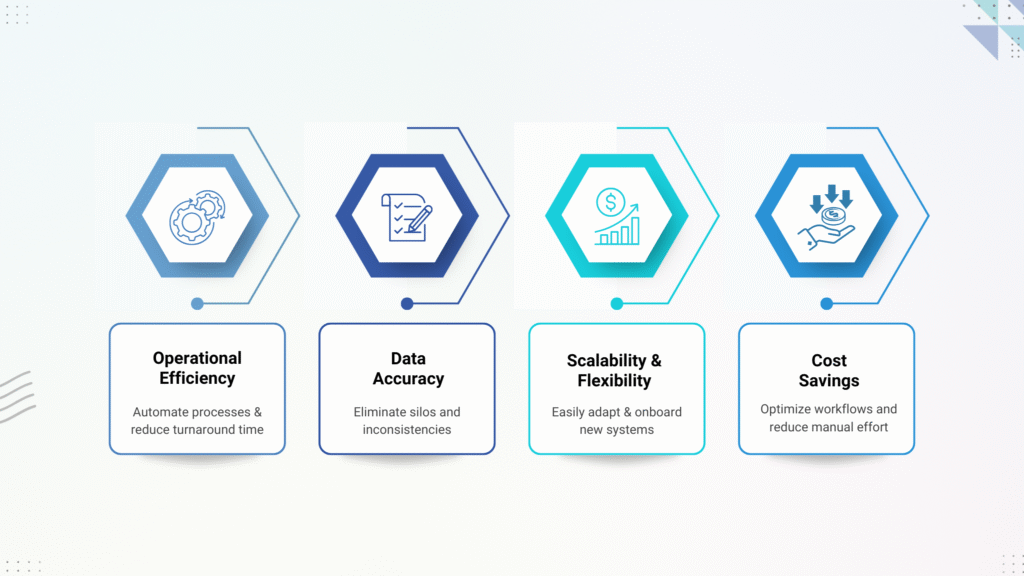
- Enhanced Operational Efficiency:
By automating manual processes and enabling real-time data exchange, Client experienced increased operational efficiency and reduced turnaround times. Improved Data Accuracy:
The unified integration platform eliminated data silos and inconsistencies, ensuring that stakeholders had access to accurate and up-to-date information for informed decision-making.Scalability and Flexibility:
MuleSoft’s scalable architecture allowed Client to adapt to evolving business needs and easily onboard new applications and services as required.Cost Savings:
Streamlining operations through MuleSoft integration resulted in cost savings associated with reduced manual effort, improved resource utilisation, and optimised workflows.
Conclusion
The successful implementation of MuleSoft integration solutions at Client demonstrates our team’s expertise in delivering tailored integration solutions to address complex business challenges. By leveraging MuleSoft’s powerful capabilities, we empowered Client to achieve operational excellence, drive innovation, and maintain its position as a leader in the maritime and logistics industry.